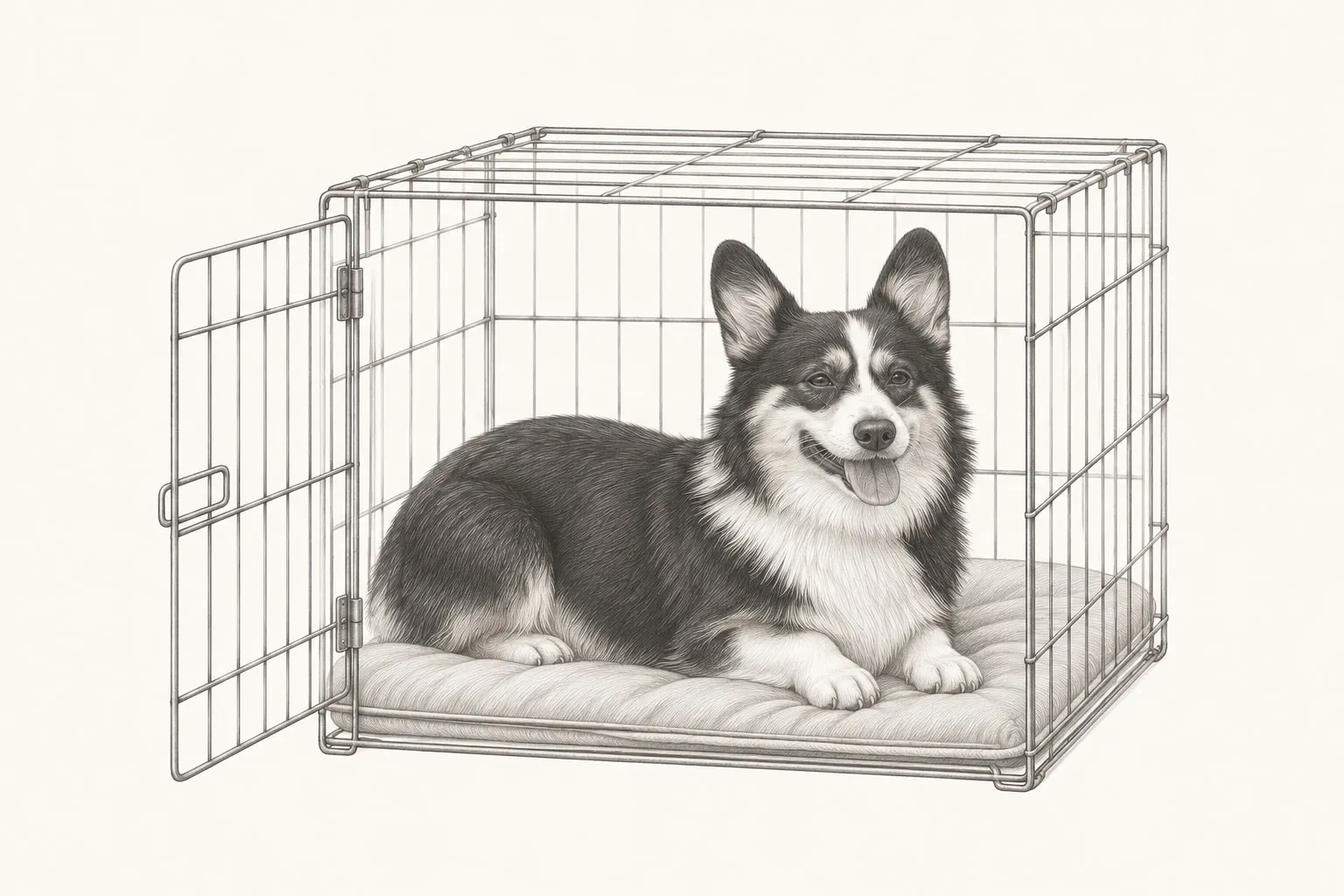
A crate at home. For and against. To give away the ending — I’m for it
You could write and talk about a crate at home for hours. And perhaps if you have only one dog at home, you have no need for a crate, though I disagree even with that statement. I think a crate at home is like a room for your child. A private, cosy space, a comfort zone, so to speak, where nobody bothers your pet, where they can chew a juicy bone or have a nap without worrying about a child waking them up.
I know you think a crate in the living room is a complete disaster and the end of aesthetics and design. That is only half true. With two hands and some materials to hand, you can turn a crate into a stylish wooden table.
A dog accustomed to a crate will cope with flights more easily (if you decide to travel with your pet). A dog sleeps better and more peacefully in a crate; a correctly sized crate is like a den, cosy and quiet. Even at night, a dog in a crate reacts less to nighttime sounds.
I looked through Etsy and put together a few interesting ideas for you, where dog crates fit nicely into the interior design. Note that you can also buy plans on the site and have a professional make the piece locally.
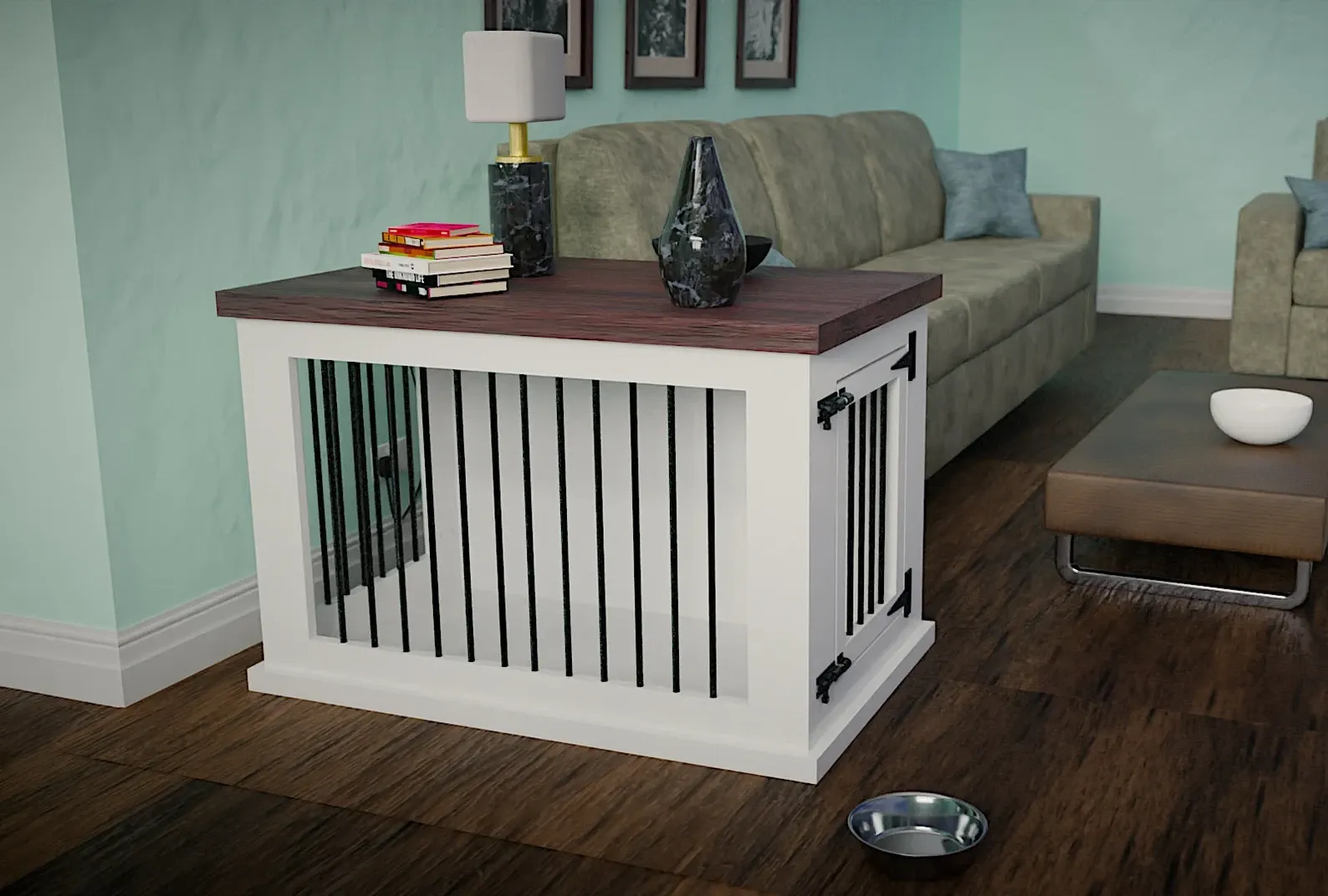
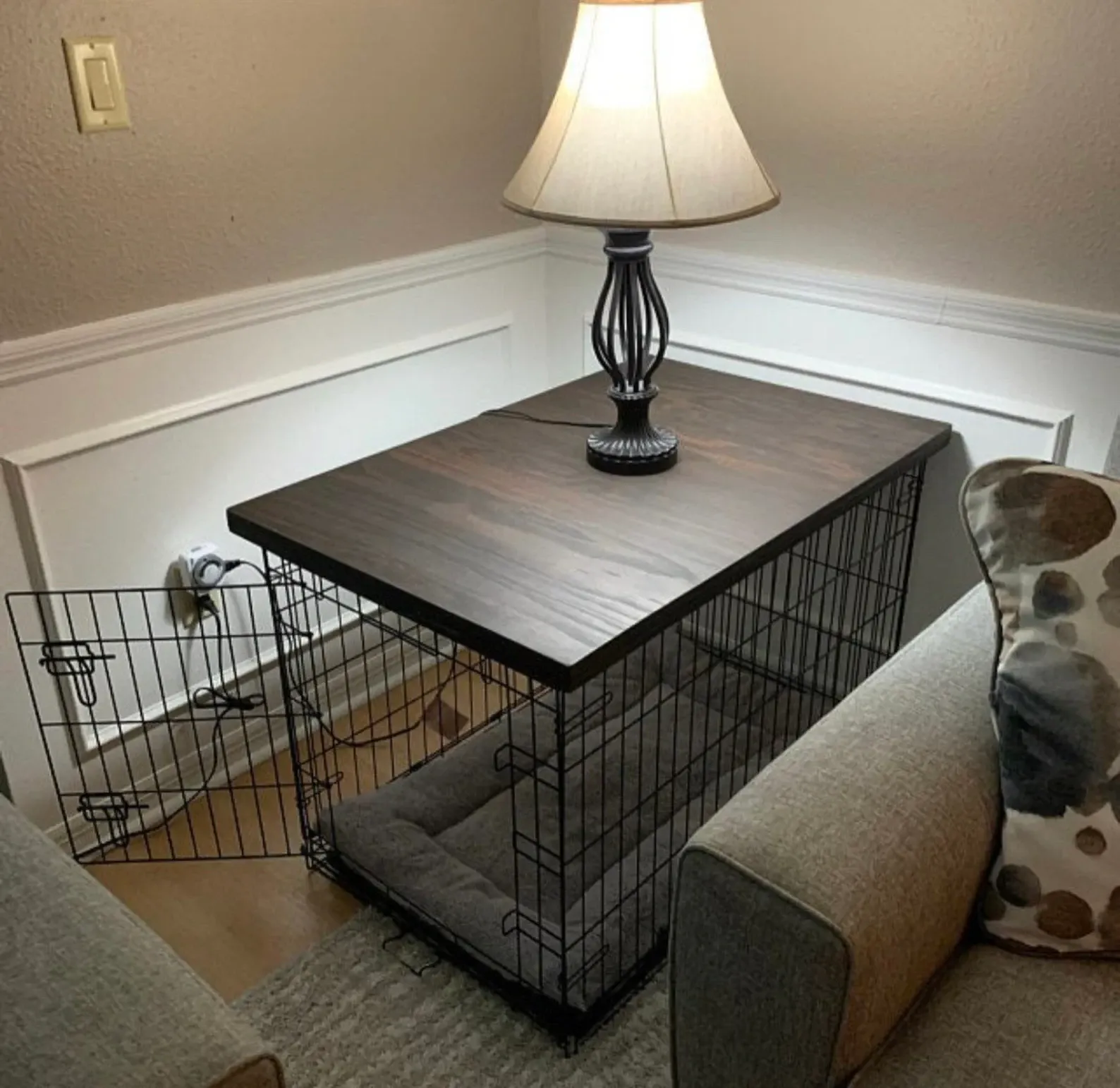
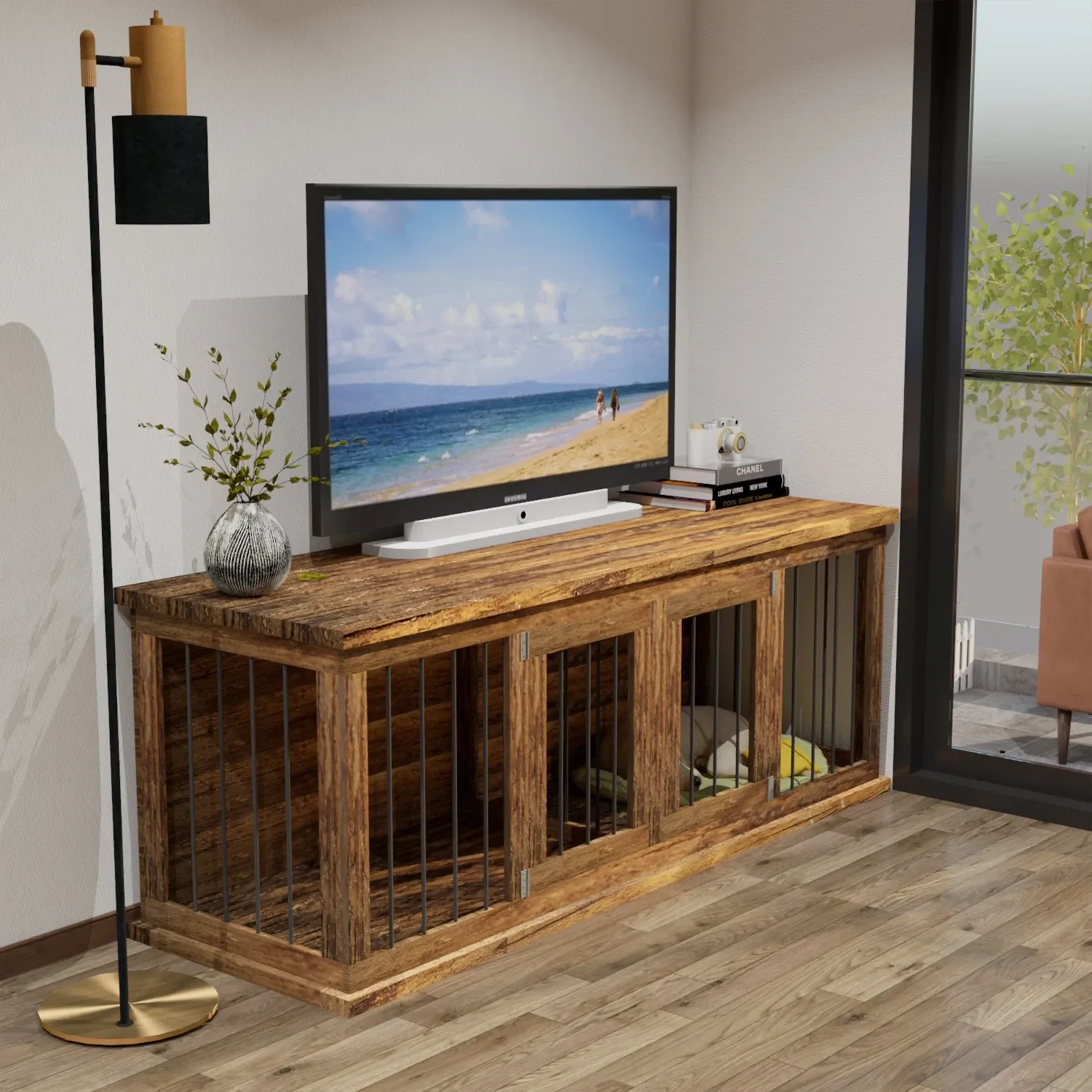
It is important to understand that 99% of the time, the crate doors are always open. For adult dogs, they are closed only if another dog comes to visit, work is being done, or the dog is injured and needs to rest (with a fracture, for example).
If you let a puppy wander around the flat in the morning while you put your shoes on, they will leave a puddle!
For puppies, we use the crate for toilet training. Things that seem unrelated give excellent results. The trick is that very late, a minute before bed, I take the puppy outside to relieve themselves and then put them in the crate or pen for the night. In the morning, when the alarm goes off (I set it for sunrise), I get up, scoop the puppy out of the crate and carry them outside. As soon as I put the puppy on the ground, they usually do their business first thing. Then I can praise them, feed them, carry them back and go back to sleep.
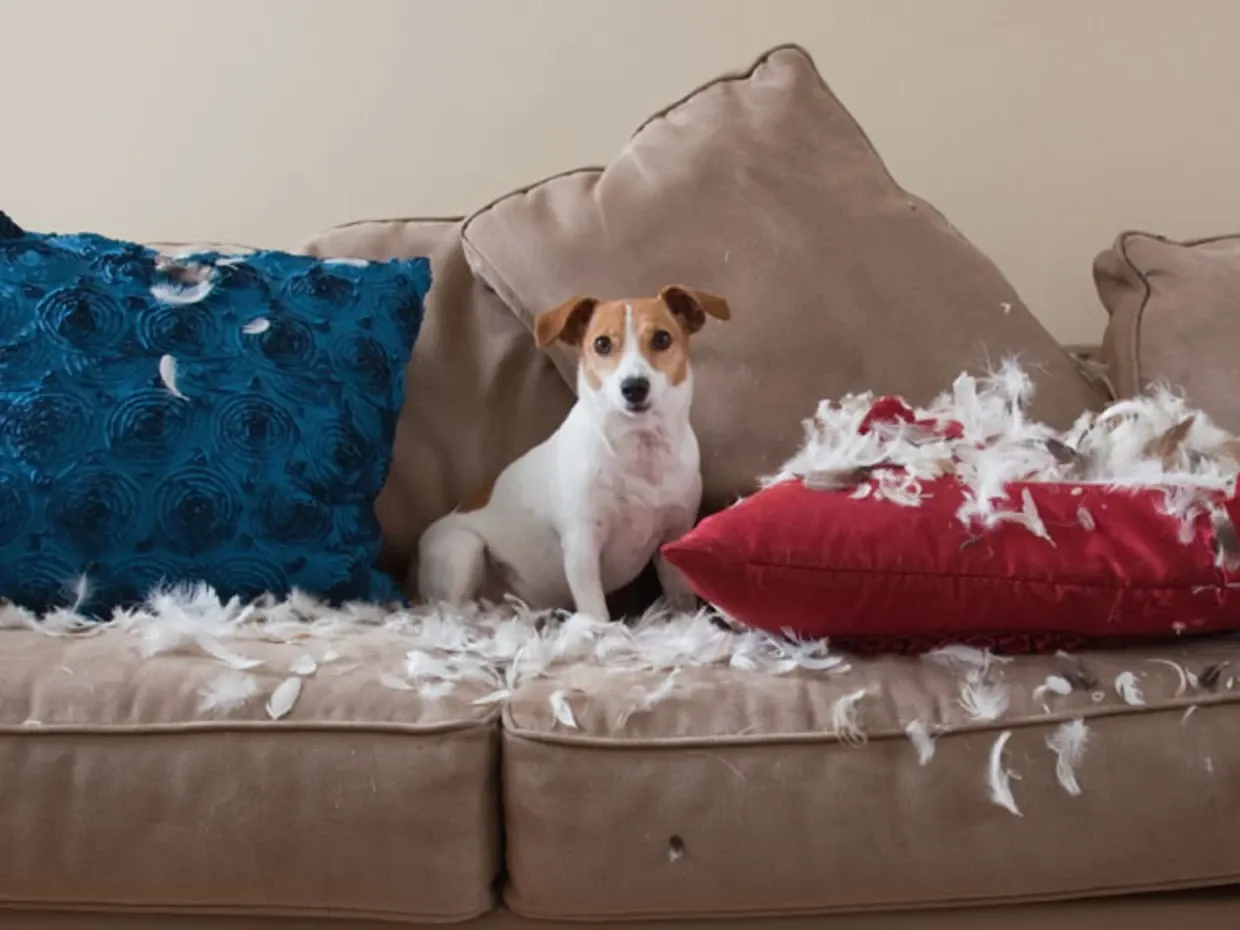
Don’t do this! Important!
Don’t ask the impossible of a puppy. There is no point locking a 3-month-old puppy in a crate for 5 hours without prior training if they can only hold on for 2 hours. The puppy will go to the toilet in the crate, and we don’t want that under any circumstances.
If the puppy has had a good walk, you can leave them in a crate or pen for a couple of hours while you go out on errands. Leaving a puppy to roam freely is quite dangerous. Firstly, it is a recipe for conflict: you come back to damaged corners, doors, cables and perhaps other things dear to your heart. I only let puppies sleep freely once the puppy has learned all the house rules and I can trust them. We work on this when someone is home, and the puppy can roam freely, explore the world and gradually learn the house rules: what is allowed and what is absolutely forbidden. Chewing a toy — go ahead; carrying off or chewing shoes — no!
If you have several dogs, crates help establish clear boundaries during feeding or when they are enjoying tasty bones and other chews.
Still not convinced you need a crate?
Then we’re coming to you!
No, I’m serious. By getting your puppy used to a crate, you will be doing yourself a favour for many years to come. You can take your dog on holiday without worrying that when you return to the room, you will find an expensive bed destroyed or other furniture attacked. Take the dog out in the morning, give them a run and a good walk, feed them, close the crate and go off to storm a pub where dogs aren’t allowed, or to the cinema or a concert. The dog will sleep peacefully, without tantrums or barking. To them, the crate is a private room that smells pleasantly of bones, warm and cosy. You will find the room just as you left it, with no conflicts.