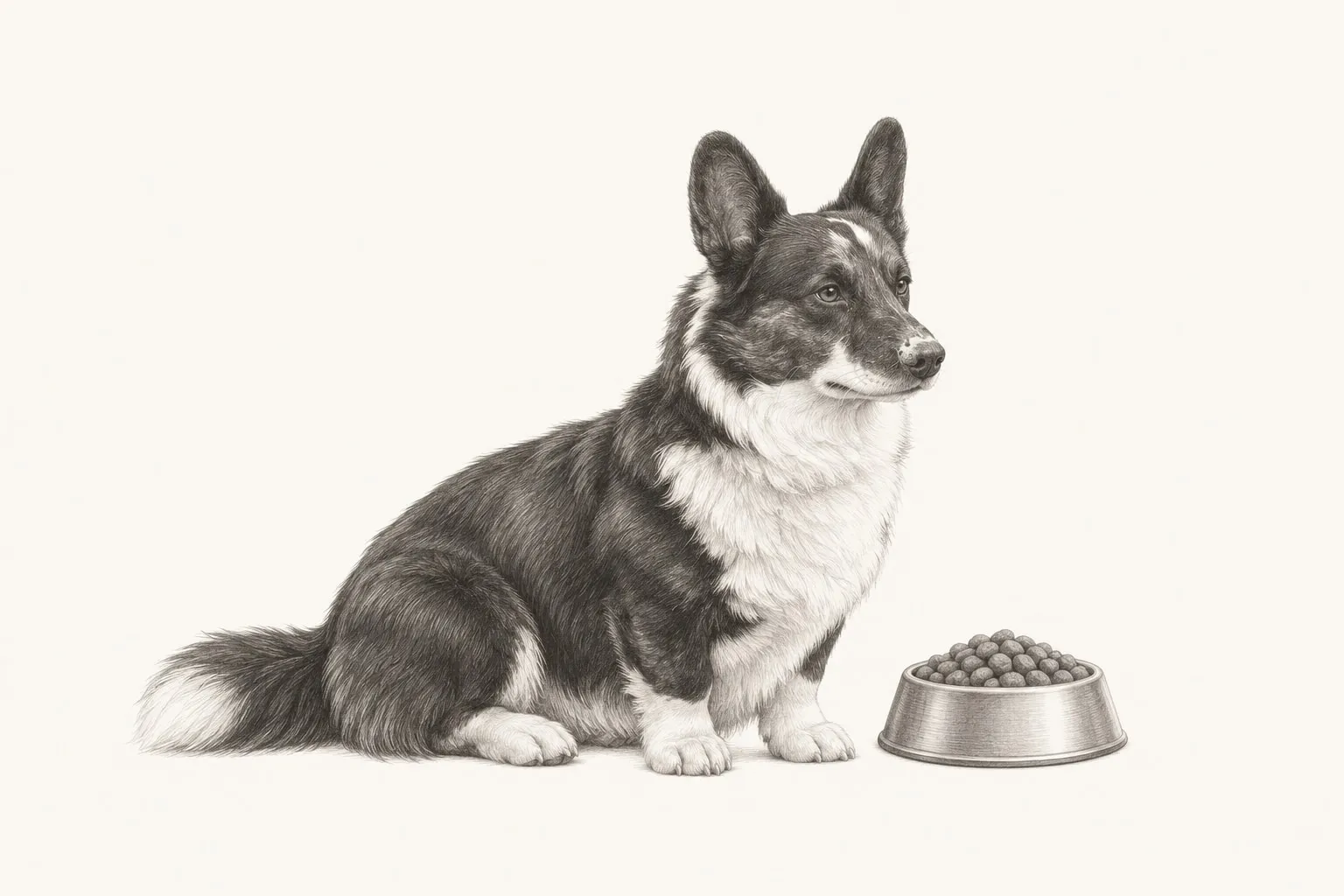
Your Corgi refuses to eat? There is a solution!
If a Corgi is your first dog, or you have had dogs before but this is your first herding dog, feeding problems will come up sooner or later. One fine day, your puppy will approach the bowl, sniff it and refuse to eat. Like any responsible parent — owner — you will worry. You might take the dog to the vet, but most likely you will simply check whether the puppy refuses all food or just this one. You will add oil to the food, crumble in some chicken or pour broth over it, and voilà, your puppy is happily gobbling up the food with your new addition again. A week later, this trick will stop working too, and the puppy will start turning up their nose again. The caring owner will decide the food is unsuitable and rush to the pet shop for a new one. Hooray!!! The puppy likes the new food, and once again there is nothing to worry about for a week… but a week or two later, something is wrong again. Sound familiar? Let’s work out how to feed your pet properly and keep their appetite throughout their life.
Attention!
Before you read on, you need to understand that a dog who refuses food may be ill, and the very first recommendation is to go to the vet, have tests done and make sure your dog is completely healthy.
Now that we understand the nature of the problem (with that important point about health), we can start analysing it and finding a solution.
The analysis is quite simple: assuming the dog is healthy, you have spoiled your dog. Food (an important resource by default) has suddenly become unimportant to your dog. Food is no longer motivating; there is plenty of it, and most likely more than your dog needs. Food is always in the bowl, and the dog can eat at any moment. Add to this the fact that Corgis are pretty clever animals, able to observe and draw conclusions: their wish to find their place in your family (pack) leads to a sigh over the bowl and a sad expression, and there is the owner running over with a tin of tuna and pouring tasty oil over the dry kibble. Your pet has successfully manipulated and trained you. Next time, the dog will check whether the trick works, and most likely it will work again and again. Again and again, the dog will refuse food and get something tastier than plain dry food. The owner will be convinced the poor dog is eating nothing (even though their belly is dragging along the floor, or they are simply in good condition), because the food is almost untouched. The bits of apple, leftover omelette and a couple of other treats between meals, as well as the chicken, don’t count, of course.
Dogs are scavengers. Dogs can go a couple of days without eating and then stuff themselves (*small dog breeds are an exception). A healthy dog is always a little hungry.
If food is a motivator, working with a dog is very easy.
So what should you do? you ask. In fact, it is all quite simple; there are huge numbers of articles on this online, all written in scientific language mentioning food aggression and other interesting terms. The problem with these articles is that the theory does not come with specific instructions on what to do. I am offering you my view of the situation, along with advice on how to solve the problem.
Let’s look at the main rules for feeding any dog.
- It is best to feed an adult dog once a day (puppies 3 times a day).
- Leave food available for a maximum of 2–5 minutes, then remove the contents of the bowl, and the dog is left with an empty bowl until the next feeding!
- If the bowl is empty after 2–5 minutes and the dog is licking up every last crumb, you can consider increasing the portion; perhaps you are not giving enough food. It is best to weigh the food (rather than judge it by eye). The amount of food (daily portion) is usually written on the bag. For a natural diet, it is 2–3% of body weight for an adult dog and 5–10% for puppies.
- If there is food left in the bowl, give half a portion at the next feeding and adjust according to the dog’s age and condition. Appetite can change depending on shedding, the season and the dog’s activity.
- If you tried to train your dog on the evening walk (giving commands with a treat in your hand), and the dog didn’t give a damn about you, saw you had food and chose to ignore you and not come over (not follow the command), I would not feed the dog when I got home that evening. Nor would I feed them the following morning; I would take the food on the walk and repeat the command. I am almost certain that this time the dog will pay attention and come over, because there is no guarantee of a bowl of food waiting at home.
- Remember, we are talking about an animal who drinks from puddles and might gobble up some poo; the food isn’t the problem! If the dog refuses food and is healthy, they have become spoiled by plenty. The right response is to remove the bowl, halve the portion and only offer food at the next feeding.
Ideally, once you have established proper feeding habits and found the right amount of food for your dog, they will always look forward to feeding time, dive into their food and quickly eat everything in the bowl within a couple of minutes. The dog will be motivated and pay attention to you, because food (like attention) is a valuable resource that needs to stay valuable for normal interaction with your four-legged friend.
How do you know you aren’t starving your fluffy sweetheart?
It’s simple. We monitor the dog’s weight, appearance and energy, and try to feed the weekly allowance over the week.
Even if you skipped a feeding yesterday and again today, perhaps tomorrow you will give a double portion, because a dog is a tough animal. For a dog, going a couple of days without eating is not a problem and does not harm their health. If you end up giving in and offer some tasty soup, liver or fish, the dog has won. Be strong and stand firm: you are training the dog, not the dog training you.
Good luck!